Showing posts with label proteins. Show all posts

Monday, November 20, 2023

487 - Probiotic Pulverizes Pathogen Persisters

E. coli
This episode: A probiotic strain of E. coli can target and destroy pathogens that survive a treatment of antibiotics!
Download Episode (8.2 MB, 12 minutes)

Show notes:
Microbe of the episode: Streptomyces griseoruber
 
Takeaways
Antibiotic resistance is becoming more and more of a problem as bacterial pathogens develop resistance to more and more drugs. For some people who develop an infection that is resistant to everything, it's as if they were living back in the days before antibiotics were discovered, when all they could do was pray for survival. New antibiotics are needed, but even more needed are new ways of approaching treatment of infections, using innovative approaches and combinations of therapeutics.

In this study, a probiotic strain of Escherichia coli was used to target potentially pathogenic E. coli bacteria that can survive treatment with a particularly effective type of antibiotic, fluoroquinolones. This probiotic strain, called Nissle, delivers toxins directly to the survivors, preventing resistant pathogens from proliferating.


Journal Paper:
Hare PJ, Englander HE, Mok WWK. 2022. Probiotic Escherichia coli Nissle 1917 inhibits bacterial persisters that survive fluoroquinolone treatment. J Appl Microbiol 132:4020–4032.


Post questions or comments here or email to bacteriofiles@gmail.com. Thanks for listening!

Subscribe: Apple Podcasts, Google Podcasts, Android, or RSS. Support the show at Patreon, or check out the show at Twitter or Facebook.

Monday, October 30, 2023

486 - Biohybrid Bacteria Build Biomass

Azotobacter vinelandii
This episode: Incorporating light-absorbing molecules into bacterial membranes can allow bacteria to use solar energy to transform nitrogen gas into fertilizer!
Download Episode (6.5 MB, 9.9 minutes)

Show notes:
Microbe of the episode: Wheat dwarf virus
 
Takeaways
Turning nitrogen gas into biologically useful compounds, such as protein or ammonia for fertilizer, is an essential part of the global nitrogen cycle and therefore, for agriculture. Today much fertilizer is produced from nitrogen gas by a chemical process that requires large amounts of energy, contributing to global warming. But certain bacteria can perform the same process using special enzymes much more efficiently.

In this study, a light-absorbing molecule was inserted into the cell membrane of some of these bacteria, allowing them to use light energy directly to power the nitrogen converting enzymes. These "biohybrids" were able to produce convert significantly more nitrogen gas and produce additional bacterial biomass from it, showing promise for using such an approach for more sustainable microbial fertilizer production.

Journal Paper:
Chen Z, Quek G, Zhu J, Chan SJW, Cox‐Vázquez SJ, Lopez‐Garcia F, Bazan GC. 2023. A Broad Light‐Harvesting Conjugated Oligoelectrolyte Enables Photocatalytic Nitrogen Fixation in a Bacterial Biohybrid. Angew Chem Int Ed 62:e202307101.

Other interesting stories:
Post questions or comments here or email to bacteriofiles@gmail.com. Thanks for listening!

Subscribe: Apple Podcasts, Google Podcasts, Android, or RSS. Support the show at Patreon, or check out the show at Twitter or Facebook.

Monday, September 18, 2023

483 - Recycling Resources Raises Robustness

E. coli
This episode: Adding tags to proteins to increase their degradation can help engineered bacteria grow and survive better under various conditions!
Download Episode (7.3 MB, 10.4 minutes)

Show notes:
Microbe of the episode: Lactococcus virus sk1

News item

Takeaways
Engineering bacteria with new genetic pathways allows us to use them in many new and promising applications. Some of these are industrial fermentations, growing large quantities of bacteria to use as catalysts for production of chemicals of interest, such as biofuels. But in other cases, engineered microbes can be most useful in less controlled environments, such as the soil. In these situations, the engineering can throw off their natural metabolic balance, making them less tolerant of the stresses of such environments.

In this study, a solution to this issue was tested using protein tags that signal the bacterial enzymes to degrade the engineered proteins. A variety of tags allowed for a variety of rates of degradation, allowing engineers to tune in the ideal rate. Bacteria with these engineered tags grew better in nutrient limited conditions than those without.

Journal Paper:
Szydlo K, Ignatova Z, Gorochowski TE. 2022. Improving the Robustness of Engineered Bacteria to Nutrient Stress Using Programmed Proteolysis. ACS Synth Biol 11:1049–1059.

Other interesting stories:

Post questions or comments here or email to bacteriofiles@gmail.com. Thanks for listening!

Subscribe: Apple Podcasts, Google Podcasts, Android, or RSS. Support the show at Patreon, or check out the show at Twitter or Facebook.

Monday, September 4, 2023

482 - Colony Concentric Clock Construction

Bacillus subtilis
By Y tambe,
CC BY-SA 3.0
This episode: Single-celled bacteria can act independently to create patterns and structure in their biofilm communities!
Download Episode (9.6 MB, 14.0 minutes)

Show notes:
Microbe of the episode: Dictyostelium discoideum Skipper virus

News item

Takeaways
Large multicellular organisms like us have interesting mechanisms for using one set of genetic instructions present in all cells to form a large, complex community of many different types of cells with different structures and functions, all working together. Single-celled microbes do not have the same requirements for genetic or structural complexity, but they do often display interesting communal patterns and behaviors.

In this study, bacteria growing in colonies on agar displayed a particular mechanism of pattern formation previously seen only in eukaryotes, called segmentation clock or clock and wavefront process. In this process, the cells in the colony are all acting individually without communication with each other, but nevertheless form a repeating ring structure in the colony as it grows, possibly allowing some measure of differentiation of cells that could help the community survive various challenges.

Journal Paper:
Chou K-T, Lee DD, Chiou J, Galera-Laporta L, Ly S, Garcia-Ojalvo J, Süel GM. 2022. A segmentation clock patterns cellular differentiation in a bacterial biofilm. Cell 185:145-157.e13.

Post questions or comments here or email to bacteriofiles@gmail.com. Thanks for listening!

Subscribe: Apple Podcasts, Google Podcasts, Android, or RSS. Support the show at Patreon, or check out the show at Twitter or Facebook.

Monday, May 22, 2023

479 - Uncomplicated Critters Conquer Cancer

T. adhaerens
By Fortunato et al. 2021.
PLOS Biol e3001471
CC BY 4.0

This episode: Simple microscopic animals can survive extreme radiation by ejecting damaged cells that might otherwise become cancer!
Download Episode (7.3 MB, 9.2 minutes)

Show notes:
Microbe of the episode: Helleborus net necrosis virus

News item

Takeaways
Any multicellular organism with different types of cells needs some sort of cell regulation, to keep each cell type doing what it’s supposed to do for the good of the organism as a whole. We know what happens when this regulation fails and one type of cells starts multiplying out of control: cancer.

However, cancer has never yet been observed in certain organisms, including the simple microscopic animal Trichoplax adhaerens. In this study, these animals are exposed to large amounts of radiation and then observed over years to see if they can develop cancer or have interesting mechanisms of resisting it.

Journal Paper:
Fortunato A, Fleming A, Aktipis A, Maley CC. 2021. Upregulation of DNA repair genes and cell extrusion underpin the remarkable radiation resistance of Trichoplax adhaerens. PLOS Biol 19:e3001471.

Other interesting stories:

Post questions or comments here or email to bacteriofiles@gmail.com. Thanks for listening!

Subscribe: Apple Podcasts, Google Podcasts, Android, or RSS. Support the show at Patreon, or check out the show at Twitter or Facebook.

Monday, March 13, 2023

476 - Bamboo Breakdown Benefits Beetle Babies

Bamboo
By I Kenpei,
CC BY-SA 3.0
This episode: Beetles inoculate bamboo with a fungus that consumes the bamboo sugars to feed the beetle larvae!
Download Episode (7.7 MB, 11.2 minutes)

Show notes:
Microbe of the episode: Saccharomyces cerevisiae virus L-BC (La)

News item

Video: Lizard beetle laying its egg

Takeaways
The structural polymers that make up plants, such as cellulose, can be difficult for many organisms to digest. Some kinds of bacteria and fungi can do it, and some animals (cows, pandas, termites) partner with these microbes to be able to eat otherwise indigestible plant material. This includes insects such as leaf-cutter ants that farm external gardens of microbes, providing them plant material and then eating the resulting microbial growth.

In this study, the lizard beetle lays its eggs in bamboo and inoculates the walls of the bamboo with a fungus that provides food to the larvae. Chemical analyses suggest that the fungus only consumes the simple sugars in the bamboo rather than breaking down the tougher polymers, which raises questions about the evolution of this interaction.

Journal Paper:
Toki W, Aoki D. 2021. Nutritional resources of the yeast symbiont cultivated by the lizard beetle Doubledaya bucculenta in bamboos. Sci Rep 11:19208.

Other interesting stories:

Post questions or comments here or email to bacteriofiles@gmail.com. Thanks for listening!

Subscribe: Apple Podcasts, Google Podcasts, Android, or RSS. Support the show at Patreon, or check out the show at Twitter or Facebook.

Monday, December 26, 2022

473 - Bacteriophage Bunks in Bacterial Barriers

Bacteriophages
By Jancheva and Böttcher,
2021, JACS 143:8344-8351
CC BY 4.0

 
This episode: A bacteriophage that overcomes the bacterial  CRISPR/Cas immune system by interrupting the CRISPR DNA with its own genome!
Download Episode (6.8 MB, 10 minutes)

Show notes:
Microbe of the episode: Wenzhou mammarenavirus
 
Takeaways
Bacteria have many ways to resist being exploited by bacteriophage viruses, including the adaptable CRISPR/Cas system that uses a piece of viral nucleic acid sequence to target and destroy incoming phages. But phages also have many ways to evade and disrupt bacterial defenses.

In this study, a phage is discovered that inserts its own genome into the CRISPR/Cas sequence in the bacterial genome, disrupting the bacterial defenses. To escape the defenses while it is doing this insertion, it carries genes for previously-unknown anti-CRISPR proteins. But inserting and removing a viral sequence from the bacterial genome is not always a clean procedure.

Journal Paper:
Varble A, Campisi E, Euler CW, Maguin P, Kozlova A, Fyodorova J, Rostøl JT, Fischetti VA, Marraffini LA. 2021. Prophage integration into CRISPR loci enables evasion of antiviral immunity in Streptococcus pyogenes. 12. Nat Microbiol 6:1516–1525.

Other interesting stories:

Post questions or comments here or email to bacteriofiles@gmail.com. Thanks for listening!

Subscribe: Apple Podcasts, Google Podcasts, Android, or RSS. Support the show at Patreon, or check out the show at Twitter or Facebook.

Monday, November 21, 2022

472 - Caulobacter Condensates Compartmentalize Kinase

Caulobacter crescentus
This episode: Bacteria can use blobs of disordered proteins to quickly adapt to new conditions!
Thanks to Dr. Saumya Saurabh for his contribution!
Download Episode (10.9 MB, 15.9 minutes)

Show notes:
Microbe of the episode: Drosophila melanogaster Micropia virus
 
Takeaways
Bacteria can adapt to environmental fluctuations via mechanisms operating at the various levels of the central dogma, or metabolism (stringent response). Recently, researchers at Stanford University discovered a mechanism that allows bacteria to sense and rapidly adapt to nutrient fluctuations by simply tuning protein self-assembly as a function of nutrient availability. Termed membraneless organelles or condensates, these proteinaceous assemblies can dynamically sequester key signaling enzymes within them in response to environmental cues. Biophysical adaptation mediated by organelles is fast, reversible, and facile; thereby representing a crucial step in the mechanistic understanding of microbial adaptation.

Journal Paper:
Saurabh S, Chong TN, Bayas C, Dahlberg PD, Cartwright HN, Moerner WE, Shapiro L. 2022. ATP-responsive biomolecular condensates tune bacterial kinase signaling. Sci Adv 8:eabm6570.

Other interesting stories:

Post questions or comments here or email to bacteriofiles@gmail.com. Thanks for listening!

Subscribe: Apple Podcasts, Google Podcasts, Android, or RSS. Support the show at Patreon, or check out the show at Twitter or Facebook.
Monday, August 29, 2022

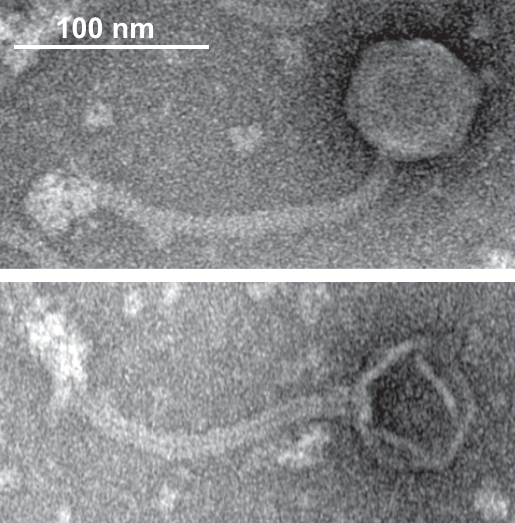
471 - Phage Fight Foils Fitness

Shigella phage A1-1
By Kortright et al., 2022.
AEM 2022, 88(e01514).
CC BY-4.0
This episode: A phage both kills bacterial pathogens and selects for reduced virulence!

Download Episode (6.3 MB, 9.9 minutes)

Show notes:
Microbe of the episode: Helminthosporium victoriae 145S virus
 
News item

Takeaways
Using bacteria-killing viruses to treat bacterial infections, or phage therapy, can be a good alternative to antibiotics in some situations when there are no effective antibiotics for a particular infection. But bacteria can evolve resistance to phages as well as antibiotics, often with little cost to their fitness.

In this study, a phage not only could treat an infection by attacking the bacteria, but the bacterial hosts that do evolve resistance to the phage do so by getting rid of certain structures that help them to cause more serious infection. Thus, therapy with this phage may both reduce the bacterial load and also make those remaining less virulent.

Journal Paper:
Kortright KE, Done RE, Chan BK, Souza V, Turner PE. 2022. Selection for Phage Resistance Reduces Virulence of Shigella flexneri. Appl Environ Microbiol 88:e01514-21.

Other interesting stories:

Post questions or comments here or email to bacteriofiles@gmail.com. Thanks for listening!

Subscribe: Apple Podcasts, Google Podcasts, Android, or RSS. Support the show at Patreon, or check out the show at Twitter or Facebook.

Monday, July 11, 2022

470 - Super Small Symbionts Soothe Symptoms

Tiny symbiont Saccharibacteria (yellow-green)
on host bacteria (red)
By Utter et al.,
CC BY-SA 4.0


This episode: Tiny bacteria that live on larger bacteria reduce the inflammation and gum disease the bigger microbes cause in the mouths of mice!

Download Episode (6.3 MB, 9.2 minutes)

Show notes:
Microbe of the episode: Actinomadura viridilutea

Takeaways
Even bacteria can be hosts to smaller symbionts living on them. Some kinds of these extremely tiny bacteria live in various parts of our bodies, and are sometimes associated with inflammation and the resulting disease. But being associated with something isn't necessarily the same as causing that thing.

In this study, tiny bacteria living on other bacteria in the mouths of mice were found to reduce the inflammation caused by their bacterial hosts, resulting in less gum disease and bone loss in the jaw. Even when the tiny bacteria were no longer present, their former bacterial hosts were still less disruptive to the mouse mouth.

Journal Paper:
Chipashvili O, Utter DR, Bedree JK, Ma Y, Schulte F, Mascarin G, Alayyoubi Y, Chouhan D, Hardt M, Bidlack F, Hasturk H, He X, McLean JS, Bor B. 2021. Episymbiotic Saccharibacteria suppresses gingival inflammation and bone loss in mice through host bacterial modulation. Cell Host Microbe 29:1649-1662.e7.

Other interesting stories:

Post questions or comments here or email to bacteriofiles@gmail.com. Thanks for listening!

Subscribe: Apple Podcasts, Google Podcasts, Android, or RSS. Support the show at Patreon, or check out the show at Twitter or Facebook.

Monday, April 4, 2022

469 - Prophage Provides Partial Protection

Salmonella invading cells
This episode: A virus lurking in a bacterial genome protects its host population from infection with other phages, by killing off infected cells!

Download Episode (7.6 MB, 11.0 minutes)

Show notes:
Microbe of the episode: Olive latent ringspot virus

Takeaways
Many bacteriophages just go in and gobble up all their host's resources to make a bunch of new viruses right away. Others play a longer game, splicing into and lurking in the host's genome across multiple generations until conditions are right to multiply more rapidly. It is beneficial to these latter kind when their host is resistant to the fast-killing variety, but how can bacteria be resistant to some phages but not others?

In this study, one prophage (the phage genome integrated into the bacterial genome) carries a gene that does this in an interesting way. It prevents invading phages from replicating and kills the host cell so the infection can't spread, protecting the population (and all the other cells containing the prophage). It also contains an immunity element that allows the prophage to replicate itself without interference.

Journal Paper:
Owen SV, Wenner N, Dulberger CL, Rodwell EV, Bowers-Barnard A, Quinones-Olvera N, Rigden DJ, Rubin EJ, Garner EC, Baym M, Hinton JCD. 2021. Prophages encode phage-defense systems with cognate self-immunity. Cell Host Microbe 29:1620-1633.e8.

Other interesting stories:

Post questions or comments here or email to bacteriofiles@gmail.com. Thanks for listening!

Subscribe: Apple Podcasts, Google Podcasts, Android, or RSS. Support the show at Patreon, or check out the show at Twitter or Facebook.

Monday, February 28, 2022

468 - Commensal Can Kill Cholera

Vibrio cholerae
This episode: Harmless gut microbes resist cholera with good defense or better offense!

Download Episode (5.8 MB, 8.4 minutes)

Show notes:
Microbe of the episode: Streptomyces corchorusii

News item

Takeaways
The community of microbes in our guts is highly diverse, yet generally they all coexist relatively peacefully. Some pathogens can invade this community and cause massive disruptions. Cholera is a disease caused by a pathogen that injects its competing bacteria with toxins and disrupts the health of the gut, leading to very watery diarrhea that can quickly dehydrate victims.

This study found that some microbes commonly found harmlessly existing in the gut can resist destruction by the cholera pathogen. One of these resists by striking back with its own toxin injection system; the other creates a barrier of slime around itself that keeps the invader's toxins from reaching it. Such resistant gut microbes could help to reduce the threat of diseases such as cholera.

Journal Paper:
Flaugnatti N, Isaac S, Lemos Rocha LF, Stutzmann S, Rendueles O, Stoudmann C, Vesel N, Garcia-Garcera M, Buffet A, Sana TG, Rocha EPC, Blokesch M. 2021. Human commensal gut Proteobacteria withstand type VI secretion attacks through immunity protein-independent mechanisms. Nat Commun 12:5751.

Other interesting stories:

Post questions or comments here or email to bacteriofiles@gmail.com. Thanks for listening!

Subscribe: Apple Podcasts, Google Podcasts, Android, or RSS. Support the show at Patreon, or check out the show at Twitter or Facebook.

Monday, December 27, 2021

467 - Prion Pivots Productive Pathways

Saccharomyces yeast
By Mogana Das Murtey and
Patchamuthu Ramasamy
CC BY-SA 3.0
This episode: Prions in yeast can allow better adaptation to changing conditions!

Thanks to David Garcia for his contribution!

Download Episode (9.5 MB, 13.9 minutes)

Show notes:
Microbe of the episode: Hepatovirus F

News item

Takeaways
Prions can be deadly. They're misshapen proteins that cause a cascade of misfolding of similar proteins if they get into the nervous system, resulting in neurodegeneration in mammals. But in other organisms, they are not always so scary; some fungi use prions to regulate their behavior in varying conditions.

In this study, a prion allows yeast to switch between a fast-growing lifestyle with shorter reproductive lifespan that can be beneficial in conditions where nutrients are often plentiful, and a slower-growing but more enduring lifestyle that helps in more scarce conditions.

Journal Paper:
Garcia DM, Campbell EA, Jakobson CM, Tsuchiya M, Shaw EA, DiNardo AL, Kaeberlein M, Jarosz DF. 2021. A prion accelerates proliferation at the expense of lifespan. eLife 10:e60917.

Other interesting stories:

Post questions or comments here or email to bacteriofiles@gmail.com. Thanks for listening!

Subscribe: Apple Podcasts, Google Podcasts, Android, or RSS. Support the show at Patreon, or check out the show at Twitter or Facebook.
Monday, December 6, 2021

466 - Microbes Mining Mars Minerals

Basalt close up
By Helgi, CC BY-SA 4.0
This episode: Bacteria are able to extract metals from rocks for industrial use, even in microgravity!

Download Episode (6.2 MB, 9.0 minutes)

Show notes:
Microbe of the episode: Decapod ambidensovirus 1

News item

Takeaways
As humanity makes progress toward becoming an interplanetary species, consideration is needed on how travelers can survive and thrive in distant places. These methods may look very different from what works well on Earth, with differences in gravity, atmosphere, and access to resources. For example, mining for materials for construction may not be feasible using methods common on Earth. An alternative may be biomining, using microbes that can selectively extract and purify specific metals from minerals.

In this study, the European Space Agency tested the ability of several microbes to extract vanadium from rocks in different gravity conditions, on the International Space Station. Two out of three microbes were able to extract twice as much vanadium as was extracted in the absence of microbes, both on a planet and up in space.

Journal Paper:
Cockell CS, Santomartino R, Finster K, Waajen AC, Nicholson N, Loudon C-M, Eades LJ, Moeller R, Rettberg P, Fuchs FM, Van Houdt R, Leys N, Coninx I, Hatton J, Parmitano L, Krause J, Koehler A, Caplin N, Zuijderduijn L, Mariani A, Pellari S, Carubia F, Luciani G, Balsamo M, Zolesi V, Ochoa J, Sen P, Watt JAJ, Doswald-Winkler J, Herová M, Rattenbacher B, Wadsworth J, Everroad RC, Demets R. 2021. Microbially-Enhanced Vanadium Mining and Bioremediation Under Micro- and Mars Gravity on the International Space Station. Front Microbiol 12:663.

Other interesting stories:

Post questions or comments here or email to bacteriofiles@gmail.com. Thanks for listening!

Subscribe: Apple Podcasts, Google Podcasts, Android, or RSS. Support the show at Patreon, or check out the show at Twitter or Facebook.
Monday, November 22, 2021

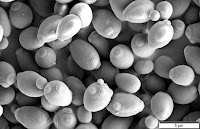
465 - Partners Produce Predator Prevention

Fungus cells with 
bacterial symbionts
By Büttner et al. 2021
PNAS 118:e2110669118
CC BY-NC-ND 4.0
This episode: Bacteria living inside soil fungus produce toxins that can protect their host from tiny predators!

Download Episode (7.7 MB, 11.2 minutes)

Show notes:
Microbe of the episode: Mycobacterium virus DLane

Takeaways
Soils have many different organisms cooperating and competing for resources. Some little worms called nematodes prey on fungi in the soil, while fungi may effectively defend themselves or strike back with toxins or traps that catch and kill the worms. On top of these interactions are other organisms that interact in various ways. In this study, bacteria living inside a kind of soil fungus produce toxins that defend the fungus against predatory nematodes.

Journal Paper:
Büttner H, Niehs SP, Vandelannoote K, Cseresnyés Z, Dose B, Richter I, Gerst R, Figge MT, Stinear TP, Pidot SJ, Hertweck C. 2021. Bacterial endosymbionts protect beneficial soil fungus from nematode attack. Proc Natl Acad Sci 118:e2110669118.

Other interesting stories:

Post questions or comments here or email to bacteriofiles@gmail.com. Thanks for listening!

Subscribe: Apple Podcasts, Google Podcasts, Android, or RSS. Support the show at Patreon, or check out the show at Twitter or Facebook.

Monday, November 8, 2021

464 - Prodding Pollen's Popping Process

Pollen
(fromWikipedia)
This episode: Certain nectar-dwelling bacteria can induce pollen to germinate to access their tasty proteins!

Download Episode (6.0 MB, 8.8 minutes)

Show notes:
Microbe of the episode: Clostridium oceanicum

News item

Takeaways
Nectar in flowers seems like it would be a great place for microbes to live, since it has so much sugar, but it's actually somewhat difficult to thrive solely in and on nectar. The carbon in sugar is only one essential element for life, and there's enough of it that it can be overwhelming to the osmotic balance of many microbes. Pollen could provide more nutrients in the form of protein and the nitrogen that comes with it, but it is difficult to penetrate its hard shell.

In this study, certain kinds of bacteria that live in nectar were able to access more pollen protein than other microbes by inducing pollen to germinate, growing out of its shell, or burst and release the protein directly. These microbes only benefited from pollen that were still alive and able to germinate, and not from those that had been disabled.

Journal Paper:
Christensen SM, Munkres I, Vannette RL. 2021. Nectar bacteria stimulate pollen germination and bursting to enhance microbial fitness. Curr Biol 31:4373-4380.e6.

Other interesting stories:

Post questions or comments here or email to bacteriofiles@gmail.com. Thanks for listening!

Subscribe: Apple Podcasts, Google Podcasts, Android, or RSS. Support the show at Patreon, or check out the show at Twitter or Facebook.

Monday, September 6, 2021

461 - Ingrained Invader Inhibits Infectors

Lambda phage
By Hans-Wolfgang Ackermann
Swiss Institute of Bioinformatics
CC BY 4.0
This episode: Training a phage strain on bacteria can increase its ability to control those bacteria for much longer than an untrained phage!

Download Episode (5.7 MB, 8.3 minutes)

Show notes:
Microbe of the episode: Pepper yellow leaf curl Indonesia virus

News item

Takeaways
With resistance to antibiotics spreading more and more among deadly bacteria, finding alternatives to treat infections is becoming more important. One option is phage therapy, using viruses that infect bacteria to weaken or wipe out pathogens, but this can be tricky. Sometimes it takes too long to prepare an effective population of phage for treatment, and sometimes the target pathogen evolves resistance to the phage too quickly

In this study, a phage that was trained, or pre-evolved, to infect specific bacteria more effectively, was able to dominate the population consistently and prevent it from becoming fully resistant. For comparison, against an untrained strain of the same phage, the bacteria developed almost complete resistance after several days.

Journal Paper:
Borin JM, Avrani S, Barrick JE, Petrie KL, Meyer JR. 2021. Coevolutionary phage training leads to greater bacterial suppression and delays the evolution of phage resistance. Proc Natl Acad Sci 118.

Other interesting stories:

Post questions or comments here or email to bacteriofiles@gmail.com. Thanks for listening!

Subscribe: Apple Podcasts, Google Podcasts, Android, or RSS. Support the show at Patreon, or check out the show at Twitter or Facebook.

Monday, August 16, 2021

460 - Prokaryote Publicity Prevents Protist Processes

Emiliania huxleyi
By Alison R. Taylor
UNC Wilmington Microscopy
PLoS Biology, June 2011 Cover
CC BY 2.5
This episode: A bacterial communication signal makes algae stop growing, which helps them survive virus attacks!

Download Episode (5.3 MB, 7.7 minutes)

Show notes:
Microbe of the episode: Veillonella parvula

Takeaways
Many interesting interactions between microbes take place in the ocean. As single-celled organisms lacking complex sensory organs, many such interactions and communications are mediated by chemical signals. Some bacteria, for example, each produce small amounts of certain chemicals and release them into the environment. When the concentration of the chemical signal builds up to a certain point, the bacteria change their behavior to take advantage of their high numbers that must be present to produce so much of the signal. This process is called quorum sensing.

Some of these chemical signals can affect the behavior of organisms other than bacteria also. In this study, a common marine algal species was found to stop growing in response to a certain bacterial signal. This chemical inhibits an enzyme required for the algae to produce nucleotides to replicate their genomes. As a result, the algae are able to resist destruction by a virus that would otherwise decimate their populations.

Journal Paper:
Pollara SB, Becker JW, Nunn BL, Boiteau R, Repeta D, Mudge MC, Downing G, Chase D, Harvey EL, Whalen KE. 2021. Bacterial Quorum-Sensing Signal Arrests Phytoplankton Cell Division and Impacts Virus-Induced Mortality. mSphere 6:e00009-21.

Other interesting stories:

Post questions or comments here or email to bacteriofiles@gmail.com. Thanks for listening!

Subscribe: Apple Podcasts, Google Podcasts, Android, or RSS. Support the show at Patreon, or check out the show at Twitter or Facebook.

Monday, July 19, 2021

458 - Slimy Cells Stop Sinking

Colonies of strains with
different floating strengths
By Kessler et al. 2021,
J Bacteriol 203(11):e00023-21
CC BY 4.0
This episode: Bacteria can resist the force of gravity in liquid culture by covering themselves with goopy sugar polymers like parachutes!

Download Episode (10.4 MB, 15.2 minutes)

Show notes:
Microbe of the episode: Brevicoryne brassicae virus

Takeaways
Put bacteria in a centrifuge, and most of the time you end up with a compact pellet of cells at the bottom of the tube, and mostly cell-free liquid above it. Bacteria do have ways to remain suspended in liquid, even without constant stirring or shaking of the container, but swimming, for example, consumes energy.

In this study, artificial selection allowed the discovery of bacteria that could resist centrifuging speeds up to 15000 times the force of gravity, remaining suspended in liquid instead of forming a pellet. Production of polysaccharide was important, but not sufficient; for the most resistance to sinking, bacteria had to attach the polysaccharide to their cell surface, to act as a sort of parachute.

Journal Paper:
Kessler NG, Caraballo Delgado DM, Shah NK, Dickinson JA, Moore SD. 2021. Exopolysaccharide Anchoring Creates an Extreme Resistance to Sedimentation. J Bacteriol 203(11):e00023-21.

Other interesting stories:

Post questions or comments here or email to bacteriofiles@gmail.com. Thanks for listening!

Subscribe: Apple Podcasts, Google Podcasts, Android, or RSS. Support the show at Patreon, or check out the show at Twitter or Facebook.

Monday, June 21, 2021

456 - Invader Induces Increased Immensity

Sulfolobus infected
with STSV1
By Xiangyux
From Wikipedia
This episode: A virus of archaea stops cells from dividing, so they just keep getting bigger and releasing more viruses!

Download Episode (6.9 MB, 10.1 minutes)

Show notes:
Microbe of the episode: Streptomyces caelestis

Takeaways
Viruses affect their hosts many different ways: instant hostile takeover of cellular machinery, lurking unseen in the genome for generations, inducing reduced cell division or excessive cell division, and more. Archaeal viruses are relatively unknown in their genetic abilities and lifestyles, but we do know that they tend not to destroy their hosts through explosive viral reproduction, and that some archaea have eukaryote-like cell cycle phases.

In this study, some viruses infecting a thermophilic archaeon interrupt its cycle in the growth phase, so hosts expand in size up to around 17 times normal, continuously releasing new viruses over time. Eventually some archaea in the population gain resistance to the viruses via their CRISPR/Cas systems, and normal-sized cells dominate the population again.

Journal Paper:
Liu J, Cvirkaite-Krupovic V, Baquero DP, Yang Y, Zhang Q, Shen Y, Krupovic M. 2021. Virus-induced cell gigantism and asymmetric cell division in archaea. Proc Natl Acad Sci 118:e2022578118.

Other interesting stories:

Post questions or comments here or email to bacteriofiles@gmail.com. Thanks for listening!

Subscribe: Apple Podcasts, Google Podcasts, Android, or RSS. Support the show at Patreon, or check out the show at Twitter or Facebook.